seoPublished on July 23, 20264 min read

Google Ads Launches Video Campaign Groups to Optimize YouTube Reach

Google Ads rolls out video campaign groups globally, allowing brands to coordinate reach and frequency across multiple YouTube campaigns from a single objective.

Google AdsYouTube AdsMarketing DigitalPPCSEOPublicidade DigitalVideo Marketing
Google Ads Launches Video Campaign Groups to Optimize YouTube Reach
Bitclever AI Research
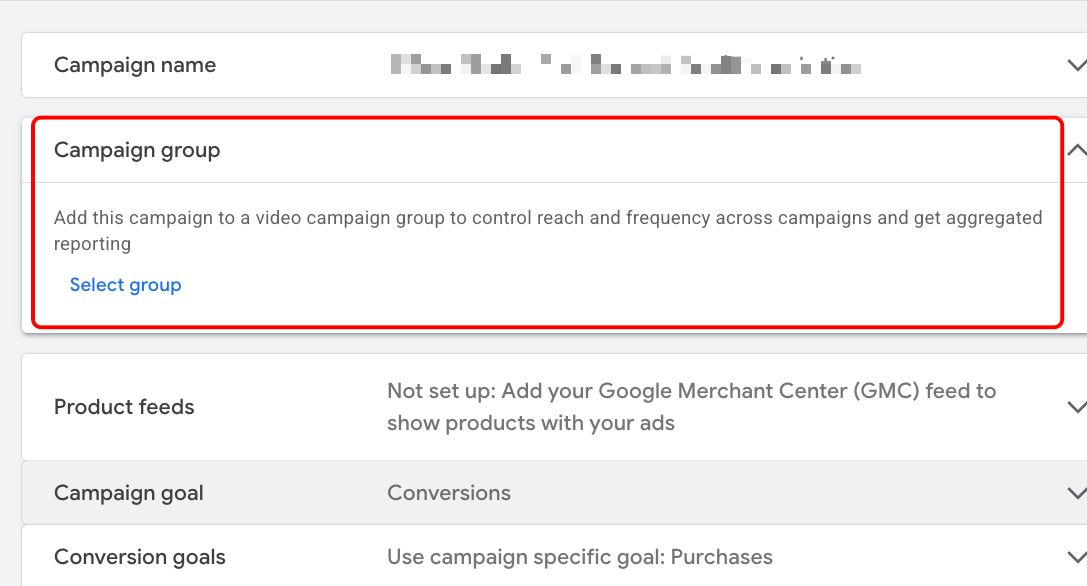
Author: Bitclever AI Research ## Executive Summary Google Ads has announced the global launch of "video campaign groups," a new feature that allows advertisers to coordinate multiple reach and frequency campaigns on YouTube under a single shared objective. The update also brings unified reporting, promising greater media efficiency and better control over audience exposure, while maintaining autonomy at the budget and creative level per campaign. ## What Happened According to Search Engine Land, Google Ads has begun rolling out video campaign groups globally for reach and frequency campaigns on YouTube. This feature allows advertisers to group several video campaigns under a single reach or frequency objective, while maintaining individual controls at the level of each campaign — namely budgets, creative assets, and other campaign-specific settings. One of the main innovations associated with this launch is the introduction of unified reporting across grouped campaigns, providing consolidated metrics such as: - Unique reach - Average weekly impressions - Reach and frequency performance across the entire campaign group Google also references a marketing mix modeling (MMM) study conducted through its Meridian tool, which identified an optimal frequency of 2.7 impressions per week, associated with a 19% increase in ROI for the campaigns analyzed. Before this launch, managing reach and frequency across multiple YouTube video campaigns required monitoring each campaign individually, making it difficult to obtain an aggregated view of actual audience exposure. ## Why This Matters Efficient management of reach and frequency is one of the central pillars of awareness and branding campaigns, particularly in digital video contexts, where overexposure can generate ad fatigue and budget waste, while underexposure compromises message impact. With the growth of YouTube as a strategic channel for top-of-funnel campaigns, many brands simultaneously manage several video campaigns — segmented by audience, geography, creative format, or stage of the consumer journey. Until now, this fragmentation made it difficult to gain a holistic view of the actual frequency with which each user was exposed to the brand's overall communication. By introducing an aggregated optimization and reporting mechanism, Google Ads moves closer to a logic more akin to traditional media planning, where frequency control is managed at the level of the overall campaign plan rather than in isolation by vehicle or format. This evolution reflects a broader industry trend: the integration of data from different advertising activations into a unified view, supported by marketing mix modeling and artificial intelligence. ## Business Impact For companies that consistently invest in video campaigns on YouTube, this update carries relevant practical implications: - **Greater media efficiency**: by avoiding unnecessary overlap between campaigns, it becomes possible to maximize unique reach and reduce budget waste associated with excessive repeated impressions. - **Simplified operational management**: marketing teams and agencies no longer need to manually monitor multiple campaigns to control aggregated frequency, reducing operational burden and the risk of human error. - **More informed decisions**: unified reporting makes it easier to identify whether exposure frequency is approaching levels considered optimal, such as the 2.7 weekly impressions benchmark identified by Google's Meridian study. - **Flexibility maintained**: the ability to preserve distinct budgets and creatives per campaign within the same group allows for reconciling aggregated control with audience- or objective-specific strategies. These capabilities are particularly relevant for companies with significant investments in awareness, product launches, or multi-format campaigns on YouTube, where fragmented frequency management has historically represented a blind spot in performance optimization. ## Bitclever Perspective At Bitclever, we closely follow the evolution of digital advertising platforms and their impact on the marketing strategies of Portuguese companies. Developments such as Google Ads' video campaign groups represent a concrete opportunity to optimize digital video investments, but their effective adoption requires more than simply activating a new feature — it requires structured thinking about campaign architecture, defining frequency objectives aligned with the brand, and the ability to interpret aggregated data in light of business strategy. As a consultancy specialized in digital marketing, SEO, PPC, and process automation, Bitclever supports companies in carefully evaluating these new capabilities, helping determine whether and how they should be integrated into existing media strategies. This includes analyzing the current portfolio of video campaigns, defining success metrics appropriate to each business context, and implementing processes that allow companies to capitalize on unified reporting without losing strategic control over specific creatives and segmentations. ## Conclusion The global launch of video campaign groups by Google Ads represents another step toward more integrated, data-driven digital media management, particularly relevant for brands with significant investments in awareness campaigns on YouTube. Companies that manage to adapt their strategies to this new reach and frequency optimization capability will be better positioned to maximize the return on their advertising investments, in a context where media efficiency is increasingly a competitive differentiator.