aiPublished on July 20, 20265 min read

NVIDIA at SIGGRAPH 2026: Agentic AI and Physics Redefine Graphics and Simulation

At SIGGRAPH 2026, NVIDIA unveiled advances in agentic AI, synthetic video detection and open world models, with direct impact on content creation and robotics.

NVIDIASIGGRAPHIA AgênticaInteligência ArtificialSimulaçãoRobóticaDeteção de DeepfakesRenderização NeuralMedia e EntretenimentoAutomação
NVIDIA at SIGGRAPH 2026: Agentic AI and Physics Redefine Graphics and Simulation
Bitclever AI Research
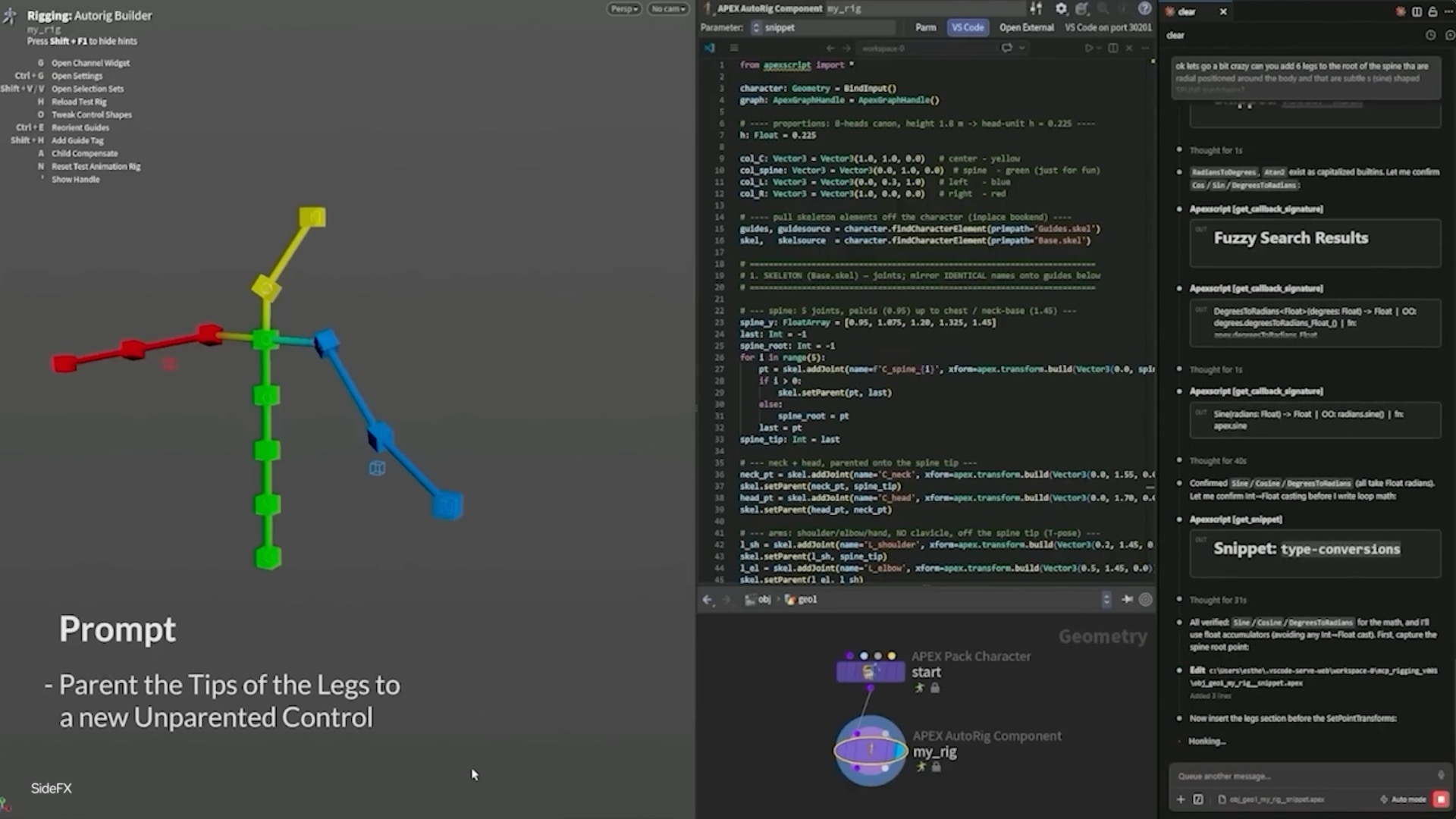
Author: Bitclever AI Research ## Executive Summary At the SIGGRAPH 2026 conference in Los Angeles, NVIDIA announced a set of advances bringing together agentic artificial intelligence, neural rendering and physical simulation, highlighted by new integrations via Model Context Protocol (MCP), a synthetic video detection microservice, and the Cosmos 3 Edge open world model. These developments reinforce the convergence between digital content creation and physical AI, with significant implications for the media, entertainment and robotics sectors. ## What Happened During SIGGRAPH 2026, which ran until July 23 in Los Angeles, NVIDIA presented—through a keynote led by researchers Neil Ashton, Edward Liu and Ming-Yu Liu—a broad set of innovations in AI research applied to graphics and simulation. Among the most significant announcements are: - **Model Context Protocol (MCP) Integration**: new connections bringing agentic AI capabilities to content creation tools, enabling millions of creators to use intelligent agents directly within their creative workflows, in collaboration with partners such as Epic Games. - **Synthetic Video Detector NIM**: a new NVIDIA Inference Microservice (NIM) designed for synthetic video detection, addressing the growing need to identify AI-generated content amid the proliferation of deepfakes and synthetic media. - **Cosmos 3 Edge**: an open world model optimized for local execution, aimed at physical AI applications on edge devices, including robotics and autonomous systems. - **NVIDIA NemoClaw on DGX Station**: a solution combining the NVIDIA Agent Toolkit with the DGX Station platform, aimed at developing and deploying AI agents in enterprise environments. - **Research advances**: multiple papers and technical demonstrations focused on neural rendering, world models and simulation methods for training AI systems, including AI that builds and simulates for other AI. These developments were presented alongside industry partners, reinforcing NVIDIA's positioning as an infrastructure provider spanning content creation, simulation and robotics. ## Why This Matters The convergence of agentic AI, neural rendering and physical simulation marks a new phase in the graphics and digital content industry. Historically, these areas evolved in relative isolation—content creation tools, robotics simulation engines and digital fraud detection systems operated in distinct silos. NVIDIA's announcements at SIGGRAPH 2026 signal an integration of these capabilities into a more cohesive technology stack. The introduction of the Synthetic Video Detector NIM is particularly significant at a time when digital content authenticity has become a central concern for media, advertising, corporate communications and even legal proceedings. The ability to reliably identify synthetic video with robust technical accuracy is increasingly critical for organizations that rely on audiovisual content for communication and reputation. At the same time, Cosmos 3 Edge reflects the trend toward decentralization of physical AI—world models capable of running locally, without constant reliance on cloud infrastructure, pave the way for more responsive and economically viable robotic applications in industrial and logistics environments. The adoption of Model Context Protocol as an integration layer between creative tools and AI agents is equally relevant: it represents an emerging standard that promises to simplify how different AI systems communicate with each other, reducing the technological fragmentation that has characterized the creative tools ecosystem in recent years. ## Business Impact For organizations operating in media, entertainment, advertising and digital content creation, these developments carry direct practical implications: **Creative productivity**: Integrating AI agents via MCP into content creation tools can significantly accelerate production workflows, reducing execution time on repetitive tasks and allowing creative teams to focus on higher-value decisions. **Reputational risk management**: The availability of tools such as the Synthetic Video Detector offers companies an additional layer of verification and compliance, essential for legal, communications and compliance departments that need to validate the authenticity of audiovisual content before publication or use in legal contexts. **Robotics and industrial automation**: For companies with operations involving physical automation—logistics, manufacturing, industrial inspection—locally executable world models like Cosmos 3 Edge can reduce latency and dependence on connectivity, making previously infrastructure-constrained use cases viable. **Enterprise agent development**: The NemoClaw/DGX Station/Agent Toolkit combination gives technical teams a more structured path to developing and deploying custom AI agents, relevant for companies seeking to build proprietary solutions rather than relying exclusively on third-party platforms. These technologies, however, require careful assessment regarding maturity, implementation costs and integration with existing legacy systems within organizations. ## Bitclever Perspective At Bitclever, we closely monitor the evolution of these technologies, recognizing their transformative potential for Portuguese and European companies seeking to modernize content creation, automation and digital verification processes. Our experience in process automation (RPA), Low-Code and applied AI enables us to help organizations pragmatically evaluate which of these innovations make sense for their specific context. Many companies face the challenge of distinguishing between emerging technologies with genuine ROI potential and passing trends. In this regard, our consultative approach focuses on three pillars: first, understanding existing business processes and identifying where agentic AI or physical simulation can generate measurable value; second, assessing the technological maturity and infrastructure requirements needed for implementations such as Cosmos 3 Edge or MCP-based solutions; third, ensuring that any technology adoption aligns with governance, security and compliance requirements, particularly relevant in areas such as synthetic content detection. We believe the value of these technologies lies not in hasty adoption, but in thoughtful integration into organizations' existing automation and digital transformation strategies. ## Conclusion NVIDIA's announcements at SIGGRAPH 2026 confirm a clear trend: the boundary between digital content creation, agentic AI and physical simulation is rapidly dissolving. For companies operating in these domains, the challenge is not merely keeping up with these innovations, but identifying where and how they can generate real business value. As these technologies mature and become more accessible, the ability to strategically evaluate and thoughtfully implement them will be decisive in distinguishing organizations that truly benefit from this new wave of AI from those merely following the trend.