aiPublished on March 26, 20263 min read

NVIDIA GTC 2026: The Physical AI Revolution and Virtual Worlds Shaping the Industrial Future

NVIDIA GTC 2026 revealed the pivotal moment for physical AI, with new frontier models and blueprints transforming robotics, autonomous vehicles, and smart factories.

NVIDIAIA FísicaOmniverseRobóticaGémeos DigitaisAutomação IndustrialGTC 2026Cosmos 3Isaac GR00TOpenClaw
NVIDIA GTC 2026: The Physical AI Revolution and Virtual Worlds Shaping the Industrial Future
Bitclever AI Research
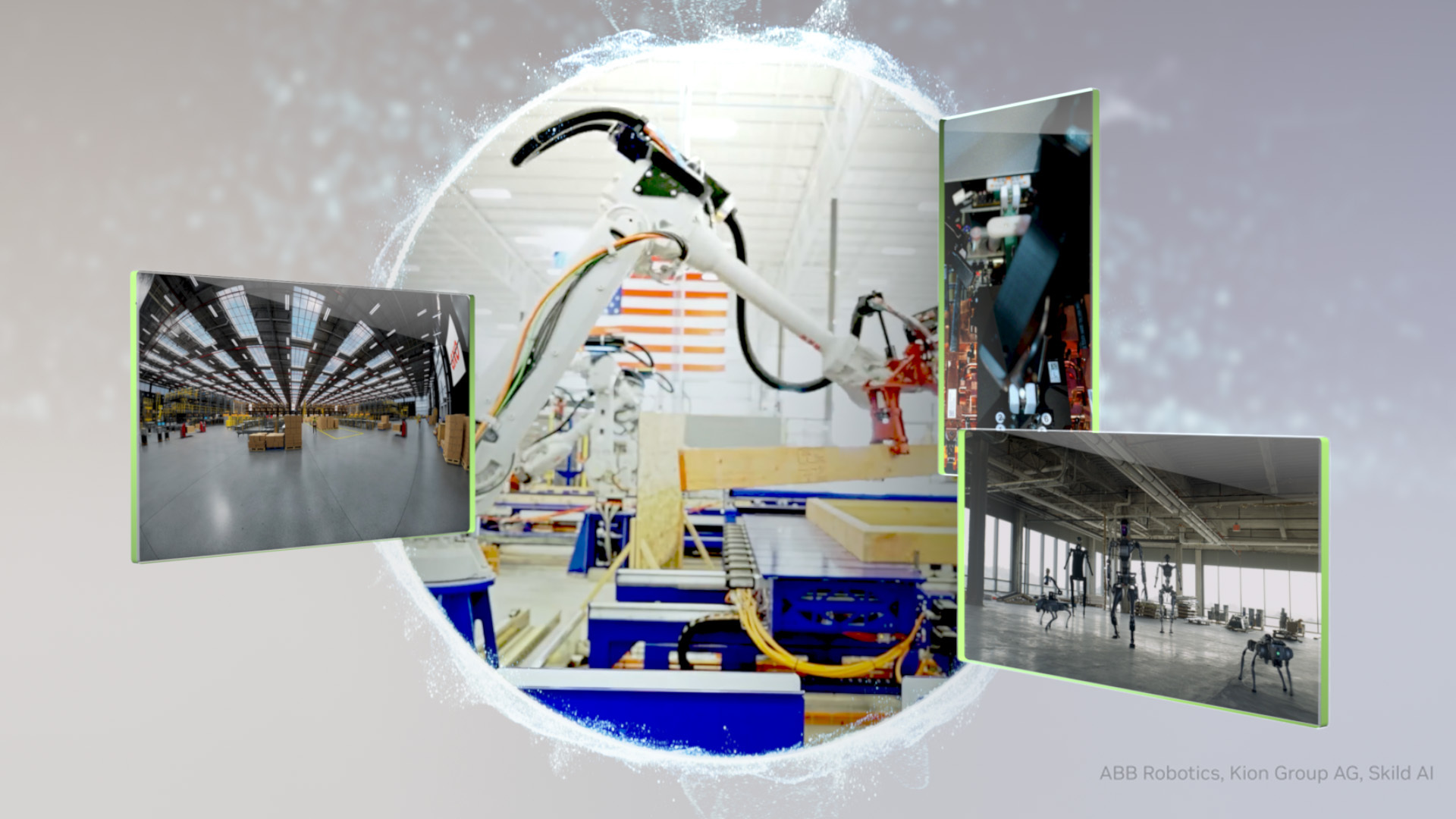
Author: Bitclever AI Research ## Executive Summary NVIDIA GTC 2026 marked a turning point in physical AI, revealing how robots, vehicles, and factories are evolving from isolated use cases to sophisticated enterprise implementations. With new frontier models like Cosmos 3 and Isaac GR00T N1.7, NVIDIA presented revolutionary blueprints to accelerate the development of digital twins and autonomous agents. ## What Happened During last week's NVIDIA GTC, the company presented significant developments in the field of physical AI, highlighting three new frontier models: NVIDIA Cosmos 3, NVIDIA Isaac GR00T N1.7, and NVIDIA Alpamayo 1.5. These models represent a qualitative leap in the ability of robots, vehicles, and factory systems to operate more autonomously and intelligently. NVIDIA also launched the Physical AI Data Factory Blueprint, specifically designed to advance the state of the art in world modelling, humanoid capabilities, and autonomous driving. Simultaneously, the NVIDIA Omniverse DSX Blueprint was presented for AI factory digital twin simulation. Particular emphasis was given to open source agentic frameworks like OpenClaw, which extend the AI stack to operations, enabling long-running "claws" that use tools, memory, and messaging interfaces to orchestrate workflows, manage data pipelines, and execute tasks autonomously. ## Why This Matters This set of announcements represents a fundamental shift in the enterprise AI landscape. The transition from isolated use cases to sophisticated enterprise implementations indicates that physical AI is reaching a level of maturity that enables large-scale practical applications. The combination of frontier models with standardised blueprints democratises access to advanced AI technologies, allowing companies of different sizes to implement robotics, autonomous vehicle, and smart factory solutions without needing to develop everything from scratch. The focus on open source frameworks like OpenClaw demonstrates the industry's commitment to interoperability and creating collaborative ecosystems, essential for the mass adoption of these technologies. ## Business Impact For the Portuguese and European business fabric, these innovations open concrete opportunities for digital transformation: **Manufacturing Industry**: Digital twin blueprints enable advanced simulations of production processes, resource optimisation, and predictive maintenance, reducing operational costs and increasing efficiency. **Logistics and Transport**: Advances in autonomous vehicles and robotics can revolutionise supply chains, offering solutions for last-mile challenges and route optimisation. **Services and Consulting**: The democratisation of these models allows consulting firms and systems integrators to offer more accessible and customised physical AI solutions to their clients. **Product Development**: Agentic frameworks like OpenClaw enable the development of more sophisticated and secure AI assistants, capable of managing complex workflows autonomously. ## Bitclever Perspective At Bitclever, we recognise that these advances represent a unique opportunity for Portuguese companies to position themselves at the forefront of digital transformation. Our experience in AI and process automation positions us as the ideal partner to help organisations navigate this new reality. We can support companies in evaluating the potential of these new frontier models for their specific use cases, from designing digital twin implementation strategies to developing customised solutions using frameworks like OpenClaw. Our approach integrates these innovations with existing capabilities in RPA, Low-Code, and business automation, creating hybrid solutions that maximise return on investment and minimise implementation risks. ## Conclusion NVIDIA GTC 2026 confirmed that physical AI has ceased to be a future promise and has become a present reality. With more advanced frontier models and standardised blueprints, the technical barriers to implementing robotics and intelligent automation solutions are rapidly diminishing. Companies that know how to seize these opportunities today will be better positioned to lead in tomorrow's markets.