aiPublished on July 16, 20265 min read

NVIDIA Launches Jetson Thor T3000 and T2000 to Drive Mass Robotics and Edge AI

NVIDIA has unveiled the T3000 and T2000 modules, built on the Thor architecture, to enable large-scale adoption of robots and AI applications at the network edge.

NVIDIAJetson ThorRobóticaEdge AIInteligência ArtificialAutomaçãoIA de PeriferiaHumanoides
NVIDIA Launches Jetson Thor T3000 and T2000 to Drive Mass Robotics and Edge AI
Bitclever AI Research
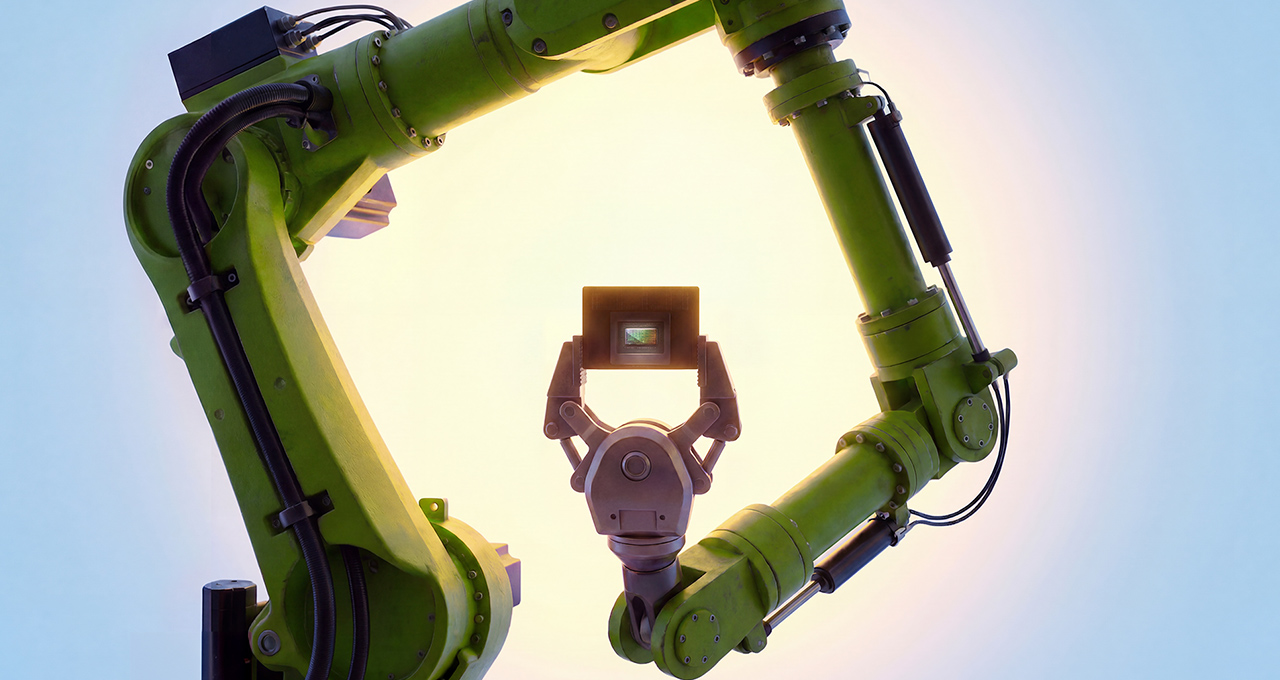
Author: Bitclever AI Research ## Executive Summary NVIDIA has announced its new T3000 and T2000 modules, built on the Jetson Thor architecture, designed to accelerate the transition of robotics and edge AI from laboratory environments to large-scale commercial deployments. With greater energy efficiency and inference performance equivalent to previous models in more compact form factors, these modules cement NVIDIA's position as the go-to supplier for manufacturers of humanoid robots and autonomous systems. ## What Happened NVIDIA introduced two new compute modules — the T3000 and T2000 — built on its Thor architecture, aimed at mass robotics and edge AI applications. These modules follow the success of the Jetson AGX Thor, which is already powering a new generation of robotic and humanoid systems, with leading companies such as 1X, Agile Robots, Amazon Robotics, Boston Dynamics, FANUC, Hitachi and Techman Robot building their solutions on this platform. The Jetson and IGX T3000 module stands out for its ability to deliver 865 teraflops of AI compute in FP4 format, while occupying roughly half the size and power consumption of the previous model, the T5000. The architecture combines an NVIDIA Blackwell GPU, an eight-core Arm Neoverse CPU, 32GB of LPDDR5X memory, 273GB/s of memory bandwidth, and 25 GbE connectivity. The IGX T3000 version offers the same level of performance while adding built-in functional safety features, enabling it to natively run the NVIDIA Halos for Robotics full-stack safety system — a solution specifically designed for robots operating in close proximity to people. One of the most notable aspects announced is that, despite its reduced form factor, the T3000 achieves inference performance levels similar to the T5000 across multimodal workloads, including large language models (LLMs), vision-language models (VLMs), vision-language-action models (VLA), and world foundation models. The move to the T3000 also emerges as a strategic response to the current context of elevated memory prices, allowing for reduced deployment costs without compromising capabilities. The T2000, in turn, was presented as the solution geared towards broader edge AI adoption, extending the reach of the Thor architecture to a wider range of devices and edge AI applications. ## Why This Matters The transition of general-purpose robots and autonomous machines from research environments to massive commercial deployments represents one of today's biggest technological challenges: the need for compact, energy-efficient AI supercomputers capable of running foundation models directly at the edge, without constant reliance on the cloud. This development is particularly relevant at a time when the humanoid robotics and industrial automation market is going through a phase of significant acceleration. The adoption of the Thor platform by players such as Amazon Robotics, Boston Dynamics and FANUC signals an important market validation, suggesting that NVIDIA's architecture is becoming a de facto standard for advanced robotics applications. The fact that NVIDIA can maintain equivalent inference performance in reduced form factors, and at more controlled costs given the current pressure on memory prices, is also an indicator of technological maturity that facilitates investment decisions by manufacturers and systems integrators. ## Business Impact For companies operating in or looking to invest in robotics, industrial automation or edge AI solutions, this announcement has concrete implications: - **Reduced operating costs**: the efficiency of the T3000 compared to the T5000, while maintaining equivalent performance, can translate into lower acquisition and operating costs, which is especially relevant given the current rise in memory component prices. - **Viability of new use cases**: the compact form factor and energy efficiency broaden the range of practical applications, from collaborative robots in industrial settings to autonomous logistics and inspection systems. - **Safety in human-shared environments**: the integration of the NVIDIA Halos for Robotics system into the IGX T3000 is particularly relevant for sectors such as manufacturing, logistics and healthcare, where safe coexistence between robots and human workers is a critical requirement. - **Greater reach for edge AI**: the T2000 opens the door to edge AI deployments across more diverse contexts, expanding the possibilities of intelligent automation beyond traditional robotics use cases. - **Need to update technology roadmaps**: companies already using previous Jetson modules should assess the impact of migrating to this new architecture within their automation investment plans. ## Bitclever Perspective At Bitclever, we closely follow the evolution of edge AI and robotics platforms, recognising the direct impact these technologies have on the competitiveness of Portuguese and European businesses. NVIDIA's introduction of the T3000 and T2000 reinforces a trend we have been identifying among our clients: growing demand for intelligent automation solutions that combine performance, energy efficiency and operational safety. For organisations considering the adoption of advanced robotics or edge AI solutions, it is essential to carefully assess not only the technical capabilities of these new platforms, but also their integration with existing business processes, applicable safety requirements, and medium-term return on investment. Bitclever can support companies in this analysis, helping to identify where intelligent automation and edge AI can generate real value — whether in industrial, logistics or service contexts — and to design technology adoption strategies aligned with each organisation's business objectives. ## Conclusion NVIDIA's new T3000 and T2000 modules represent a significant step towards the democratisation of advanced robotics and edge AI, making these technologies more accessible, efficient and safe for large-scale deployment. As leading manufacturers continue to adopt the Thor architecture, we can expect to see accelerated integration of autonomous robots and edge AI systems across diverse business contexts, reinforcing the importance for organisations to closely monitor this technological evolution.