aiPublished on July 22, 20265 min read

NVIDIA Open-Sources First GPU-Accelerated Medical Physics Simulation Framework

NVIDIA has open-sourced Medical Physics Simulation, a GPU-accelerated framework that speeds up the training and testing of medical robots through anatomy and device simulation.

NVIDIAInteligência ArtificialRobótica MédicaOpen SourceSimulaçãoHealthcare TechPhysical AIGPU Computing
NVIDIA Open-Sources First GPU-Accelerated Medical Physics Simulation Framework
Bitclever AI Research
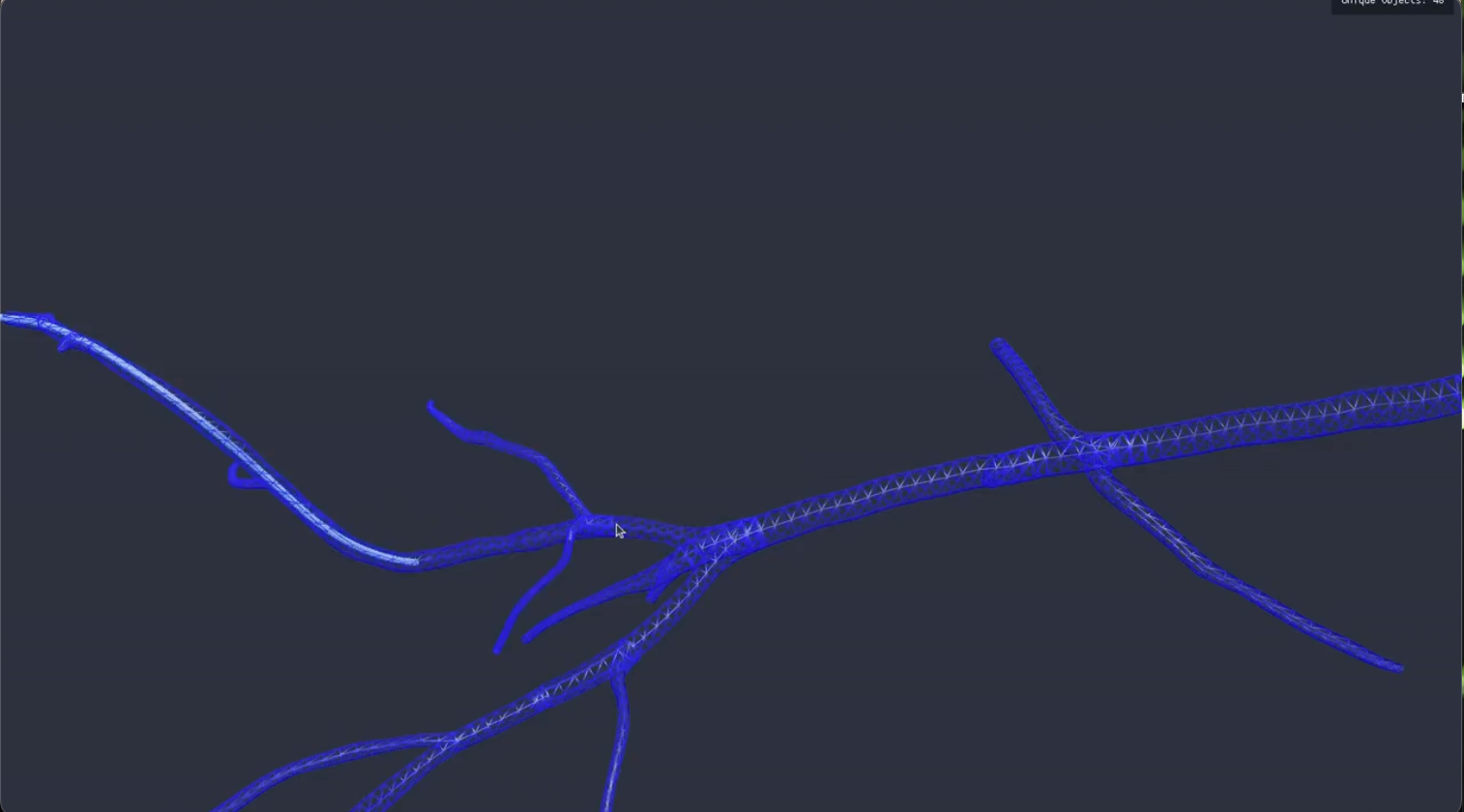
Author: Bitclever AI Research ## Executive Summary NVIDIA announced the open-source release of Medical Physics Simulation, a new capability within NVIDIA Isaac for Healthcare that enables GPU-accelerated simulation of interactions between anatomy, medical devices and sensors. The framework promises to drastically reduce the time and cost associated with developing medical robots, by allowing robot policies to be trained and validated in virtual environments before resorting to costly physical testing. ## What Happened NVIDIA introduced Medical Physics Simulation, described as the first open-source, GPU-accelerated framework focused on physical simulation in the field of medical robotics. The tool integrates into the NVIDIA Isaac for Healthcare ecosystem and is built on technologies such as CUDA, Warp, Newton and Cosmos, allowing developers to realistically model the interaction between anatomy, medical devices, tissue and sensors. According to NVIDIA, one of the biggest obstacles to developing healthcare robots is obtaining sufficiently varied and representative data to train, test and improve the behaviour of these systems. Human anatomy varies significantly between patients, medical instruments bend, press and slide in complex ways when interacting with tissue, and the associated imaging can be noisy or incomplete. Furthermore, rare and edge-case scenarios — precisely the ones most important to understand from a safety standpoint — don't occur with predictable regularity, making them difficult to capture in real-world settings. The framework allows teams to generate these hard-to-capture scenarios, test in silico, and train or evaluate robot policies before moving on to testing phases that require physical hardware. By providing reusable simulation environments, NVIDIA eliminates the need to rebuild custom scenes for each new workflow, translating into time savings and a faster innovation cycle. The system's architecture supports running hundreds of simulation environments in parallel, allowing teams to explore a broader range of scenarios and identify potential failures before they occur in a real clinical context. As an open-source project, medical robotics developers have full access to the framework's code, allowing them to inspect it, adapt it to their own devices and workflows, and build on a GPU-accelerated foundation already integrated with the rest of the NVIDIA ecosystem. ## Why This Matters Transparency around data, models and weights is particularly critical in the healthcare sector. Unlike other AI applications, systems operating in a clinical context require a high level of rigour, reproducibility and auditability — not only for ethical reasons, but also due to regulatory requirements. Access to open models and weights allows development teams to consistently reproduce results, evaluate system performance across different anatomies and clinical scenarios, identify limitations before they manifest in real-world settings, and build the evidence base needed for submission to regulatory bodies. This NVIDIA initiative comes at a time when physical robotics and so-called "physical AI" are gaining accelerated traction across multiple sectors. In the specific case of healthcare, experience is, in practice, data in motion: robots need to learn to operate correctly even when anatomy varies, devices behave differently, conditions change, or a decision policy fails unexpectedly. The ability to simulate these variations in a scalable and accelerated way represents a qualitative leap compared to traditional approaches, which relied heavily on slow and costly physical testing. ## Business Impact For companies developing medical technology, surgical robotic devices or assisted diagnostic solutions, this release has relevant practical implications: - **Reduced development costs**: virtual simulation reduces dependence on physical prototypes and costly preliminary clinical testing, allowing faster iteration on device design and algorithms. - **Faster time-to-market**: by enabling systematic testing of rare and edge-case scenarios, teams can anticipate problems that would otherwise only be identified in advanced development stages or even after launch. - **Improved regulatory evidence base**: the framework's open-source and reproducible nature makes it easier to build robust technical documentation, a critical factor for approvals from bodies such as the FDA or EMA. - **Democratisation of access to advanced infrastructure**: by making the framework available for free and as open source, NVIDIA lowers the barrier to entry for startups and smaller companies that would otherwise lack the resources to develop equivalent simulation capabilities in-house. - **Need for specialised skills**: to fully leverage this technology, organisations will need teams with skills in physical simulation, GPU computing and synthetic data pipeline integration — a talent challenge many medical device companies still lack internally. ## Bitclever Perspective At Bitclever, we follow the advancement of frameworks like Medical Physics Simulation with particular interest, as they represent a convergence point between artificial intelligence, process automation and advanced technological infrastructure — three core areas of our work. For healthcare and life sciences companies considering adopting physical robotics or advanced simulation technologies, integrating these tools into existing technology ecosystems requires careful planning. Assessing what computing infrastructure is needed, defining workflows that leverage synthetic data generated by simulation, and coordinating between engineering, regulatory and business teams are steps where specialised consulting can make a significant difference. Moreover, the open-source nature of these technologies, while advantageous in terms of transparency and cost, requires internal or partner technical expertise for adaptation, maintenance and responsible governance — especially in regulated contexts such as the healthcare sector. Bitclever can support organisations in the strategic evaluation of these tools, in defining technology adoption roadmaps, and in implementing automation and AI solutions that simultaneously respect operational efficiency and regulatory compliance criteria. ## Conclusion NVIDIA's release of Medical Physics Simulation marks a significant step in the maturity of physical AI-based medical robotics, by making accessible — openly and GPU-accelerated — a capability previously reserved for teams with advanced simulation resources. For companies in the sector, the challenge now is to assess how to integrate these tools into their own development cycles, balancing innovation, cost and regulatory compliance. As these technologies evolve, the ability to adopt them strategically may become an increasingly decisive competitive differentiator.