aiPublished on July 17, 20265 min read

NVIDIA Vera Rubin: How the New Platform Optimizes the Cost of Intelligence for Agentic AI

NVIDIA introduces the Vera Rubin platform, designed to maximize 'intelligence per dollar' in the continuous post-training required by agentic AI models.

NVIDIAIA AgênticaVera RubinInteligência ArtificialPós-TreinoReinforcement LearningInferênciaAutomação Empresarial
NVIDIA Vera Rubin: How the New Platform Optimizes the Cost of Intelligence for Agentic AI
Bitclever AI Research
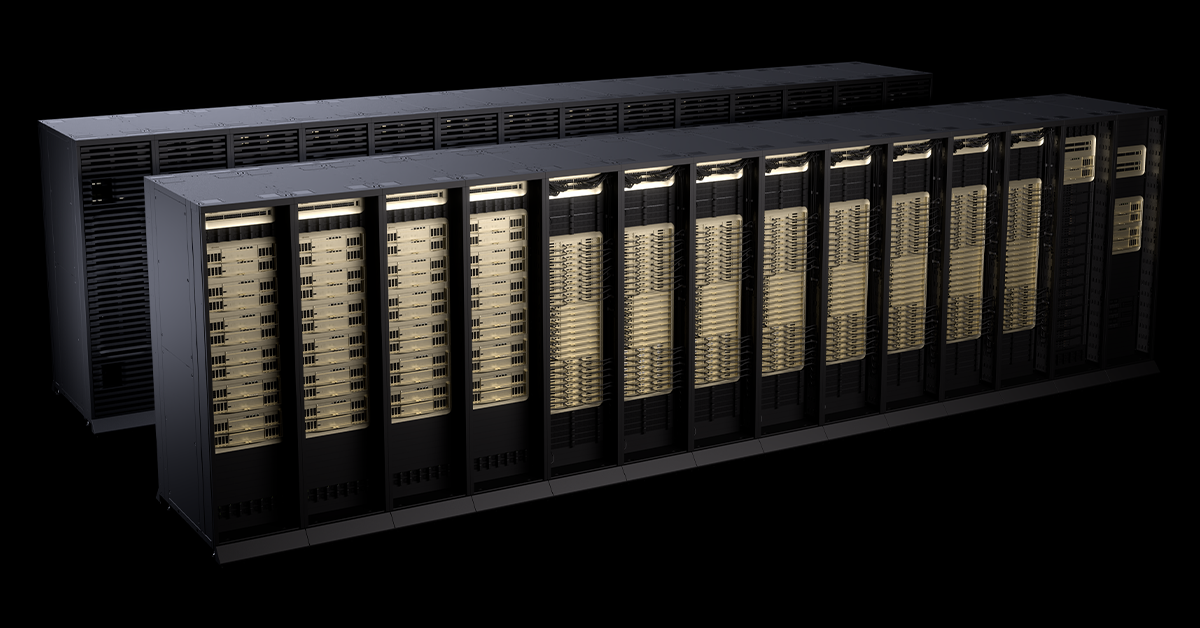
Author: Bitclever AI Research ## Executive Summary NVIDIA has announced the Vera Rubin platform, developed through an extreme hardware-software codesign process to reduce the cost per token in the post-training of agentic AI models. This development responds to a fundamental shift in the training paradigm: post-training has stopped being a one-off stage and become a continuous process, making the "intelligence per dollar" metric central to any organization looking to operate AI agents in production. ## What Happened According to NVIDIA's official blog, the company introduced the Vera Rubin platform as a response to the specific computational demands of agentic AI. Unlike traditional generative models, which respond to a prompt in a single pass, agentic models are given a goal and need to plan, use different tools, and recover from errors that arise during execution. This fundamental difference changes the nature of post-training — the phase that refines a model after initial training on raw data. While post-training was traditionally seen as a final fine-tuning step, NVIDIA explains that in the agentic era this process has become continuous: the tools an agent uses change week to week, edge cases emerge in production that no test suite anticipated, and each deployment brings its own code, policies, and environment. According to the source, post-training is where intelligence is actually built. In pre-training, the model learns to predict the next token, which gives it fluency but not intelligence. It is in post-training that it learns to write code, plan multi-step tasks, use search tools, and recover when something goes wrong — through reinforcement learning (RL) techniques, since there is no "answer key" to memorize, only a reward to optimize. NVIDIA emphasizes that the goal of post-training is to maximize intelligence per dollar, optimizing the throughput of every forward pass and backward pass in the continuous learning cycle. The forward pass — inference — is measured in cost per token, so any improvement in that cost directly translates into greater intelligence per dollar achieved. ## Why This Matters This announcement marks a relevant paradigm shift for the entire AI industry. For years, AI infrastructure focus was concentrated mainly on the initial training of large models and, more recently, on inference. NVIDIA now positions continuous post-training as the central workload of the agentic era. This reframing has direct implications for how AI infrastructure is sized and budgeted. If post-training stops being a one-time event and becomes a permanent cycle — constantly fed by production data, new edge cases, and tool changes — then the computational volume required grows not because a single run gets bigger, but because the runs never stop. For organizations already deploying or planning to deploy AI agents in real-world environments, this means that the efficiency of the underlying hardware — and ultimately the cost per token — becomes a determining factor in the long-term economic viability of these systems. The "intelligence per dollar" metric thus becomes a strategic indicator as important as model accuracy or response speed. ## Business Impact For CTOs and business decision-makers, this development carries several practical implications to consider: - **Reassessing AI operational costs**: if post-training is continuous, the costs associated with maintaining and fine-tuning AI agents in production stop being a one-off investment and become part of the recurring operational budget. - **Need for adapted infrastructure**: companies operating AI agents in dynamic environments — with tools, policies, and code that change frequently — should consider infrastructure capable of supporting continuous reinforcement learning cycles, not just static inference workloads. - **Prioritizing cost-per-token efficiency**: as post-training becomes more frequent, computational efficiency (measured in cost per token) directly impacts the return on investment of agentic AI initiatives. - **Long-term planning for autonomous agents**: organizations looking to scale the use of AI agents in critical processes should anticipate that maintaining the quality of these systems will require ongoing refinement cycles, rather than just an initial deployment followed by minimal maintenance. ## Bitclever Perspective At Bitclever, we closely track the evolution of AI platforms and their impact on business automation strategies. The paradigm shift announced by NVIDIA — in which continuous post-training becomes central to the economic viability of agentic AI — reinforces a trend we already observe among clients deploying intelligent automation solutions: the need to think of AI not as a project with a defined start and end, but as a living system that requires ongoing monitoring, tuning, and optimization. This is precisely the type of challenge where Bitclever's expertise in process automation (RPA), Low-Code, and AI solution integration can make a difference. We help organizations understand not only the technical capabilities of these new platforms, but also the practical implications in terms of operational costs, system architecture, and data governance needed to operate AI agents sustainably and efficiently over time. Rather than simply recommending a specific technology, our role is to help companies carefully evaluate when and how agentic AI makes sense in their context, taking into account the true total cost of ownership of these systems — including the continuous post-training cycle that these new platforms aim to optimize. ## Conclusion NVIDIA's Vera Rubin platform highlights an important evolution in how the industry conceives infrastructure for agentic AI: continuous post-training, rather than just initial training or inference, has become the determining factor for intelligence per dollar. For companies already using or planning to adopt autonomous AI agents, understanding this dynamic is essential to making informed decisions about infrastructure, budget, and long-term strategy. Bitclever will continue to monitor these developments, helping organizations navigate this rapidly evolving technological landscape with clarity.