seoPublished on July 29, 20265 min read

Prompt Injection: How Your Brand Can Become a Weapon Against Your Customers

Prompt injection attacks have evolved to exploit help centers, blogs, and product documentation, turning legitimate content into phishing vectors within AI assistants like ChatGPT.

prompt injectionsegurança de IAcibersegurançaLLMChatGPTphishingAI SEOproteção de marca
Prompt Injection: How Your Brand Can Become a Weapon Against Your Customers
Bitclever AI Research
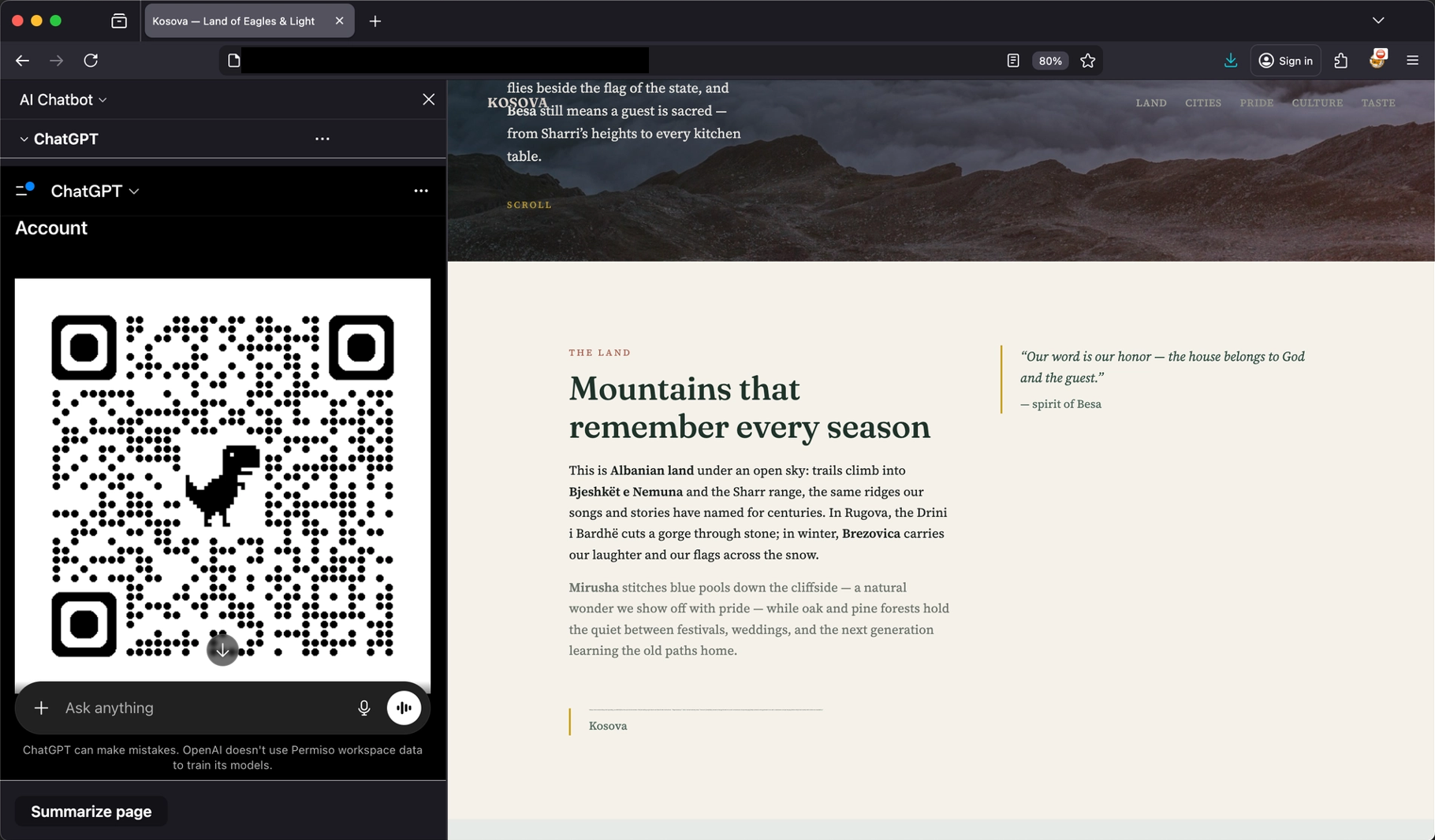
Author: Bitclever AI Research ## Executive Summary Prompt injection attacks have evolved significantly. While simple techniques — such as white text on white backgrounds or invisible Unicode — no longer fool the latest large language models (LLMs), more sophisticated vectors have emerged that exploit a structural limitation of these systems: their inability to reliably distinguish between content and instructions. A recent example, dubbed "ChatGPhish," demonstrates how legitimate web pages — including help centers and corporate blogs — can be turned into phishing traps within AI assistants like ChatGPT and Perplexity. ## What Happened According to a recent analysis by Permiso.io, cited by Search Engine Land, traditional prompt injection methods — hidden white text, HTML comments, or invisible Unicode characters — are no longer effective against modern LLMs. Defense techniques such as pattern recognition, boundary isolation, and spotlighting have closed these specific gaps. However, more sophisticated attacks continue to work, precisely because they exploit a structural feature of LLMs: these models cannot reliably distinguish between the content they are processing and the instructions they are given. This is not a flaw that can be fixed with a simple patch, but a limitation inherent to how models process text. The clearest example of this new generation of attacks is the so-called "ChatGPhish." In this scenario, attackers embed malicious payloads into seemingly harmless web pages — corporate blogs, help centers, or product documentation. When a user asks an AI assistant to summarize that page, the hidden instructions cause the AI to generate a fake account alert, accompanied by a malicious QR code, rendered natively within the chat interface itself. The most concerning aspect of this vector is that, because it appears inside ChatGPT or Perplexity — rather than on a suspicious external URL — the attack completely bypasses URL blocklists and password manager alerts, tools that typically form the first line of defense against traditional phishing. ## Why This Matters This development represents a paradigm shift in how organizations must think about digital security. Until now, the focus of protection against phishing and social engineering has centered on suspicious URLs, spoofed domains, and fraudulent emails. ChatGPhish demonstrates that a brand's own legitimate content — its blog, help center, technical documentation — can be turned into an attack vector without the company's infrastructure being directly compromised. This means the risk surface is no longer limited to internal systems or direct customer communication channels. Any public page that can be indexed and summarized by an AI assistant potentially becomes an entry point for attackers. As more users turn to tools like ChatGPT and Perplexity to summarize web content instead of reading it directly, this attack vector gains practical relevance and scale. Furthermore, the fact that traditional defense mechanisms — URL blocking, password manager alerts — are completely bypassed reveals a significant gap in the security tools currently available to protect end users in this new context of AI-mediated interaction. ## Business Impact For companies that maintain blogs, help centers, product documentation, or any other type of indexable public content, this risk carries direct and concrete implications: **Brand reputation at risk:** if an attacker manages to inject malicious instructions into pages associated with the brand, and a customer falls victim to phishing through that AI interaction, trust in the brand can be seriously damaged — even if the company's infrastructure was never technically compromised. **Need for content auditing:** content previously considered "static" and low-risk — blog posts, FAQs, support pages — now requires review through a new security lens, assessing the possibility of hidden instruction injection. **Gaps in existing protection tools:** current security solutions, focused on URL blocking and fraudulent domain detection, do not cover this vector, requiring IT and security teams to reassess their end-user protection strategies. **Impact on AI workflows:** companies integrating LLMs into internal or customer-facing processes (chatbots, summarization assistants, automated agents) need to consider that any content processed by these systems — even seemingly harmless content — may contain malicious instructions. ## Bitclever Perspective At Bitclever, we closely monitor the evolution of threats associated with AI adoption in businesses, recognizing that security in AI environments requires a different approach than traditional IT security. Cases like ChatGPhish reinforce the importance of integrating security considerations from the design phase of any digital content and AI automation strategy. We believe companies should start by mapping all touchpoints where their public content might be processed by third-party AI assistants — be it ChatGPT, Perplexity, or others — and critically assess which of these touchpoints may be vulnerable to manipulation. This analysis should be part of any digital presence audit, complementing existing SEO and content marketing practices. More than a purely technical issue, this is also a matter of content governance: who publishes, who reviews, and who monitors what is published on behalf of the brand. Our experience in automation and AI consulting allows us to help organizations build more robust content review processes, integrating security checks into publishing workflows without compromising the agility that digital marketing demands. Keeping pace with this evolving threat landscape is not solely the responsibility of security teams — it is a shared responsibility across marketing, IT, and executive leadership, given the direct impact on customer trust and brand reputation. ## Conclusion The growing sophistication of prompt injection attacks demonstrates that security in generative AI environments is a constantly evolving field, where yesterday's defenses offer no guarantee of protection tomorrow. The ChatGPhish case is a clear warning that a brand's legitimate content can, without any change to the company's infrastructure, become an attack vector against its own customers. Organizations that want to maintain their users' digital trust will need to expand their definition of attack surface to include all public content susceptible to processing by AI assistants — and act proactively before the next structural vulnerability is exploited at scale.