aiPublished on July 24, 20266 min read

South Korea Doubles Down on AI with NVIDIA at San Francisco AI Summit

At the San Francisco AI Summit, South Korea and NVIDIA announced a joint AI lab with KAIST, reinforcing Korea's national strategy for global leadership in artificial intelligence.

Inteligência ArtificialNVIDIACoreia do SulAgentic AIInvestigação e DesenvolvimentoInfraestrutura de IAParcerias Tecnológicas
South Korea Doubles Down on AI with NVIDIA at San Francisco AI Summit
Bitclever AI Research
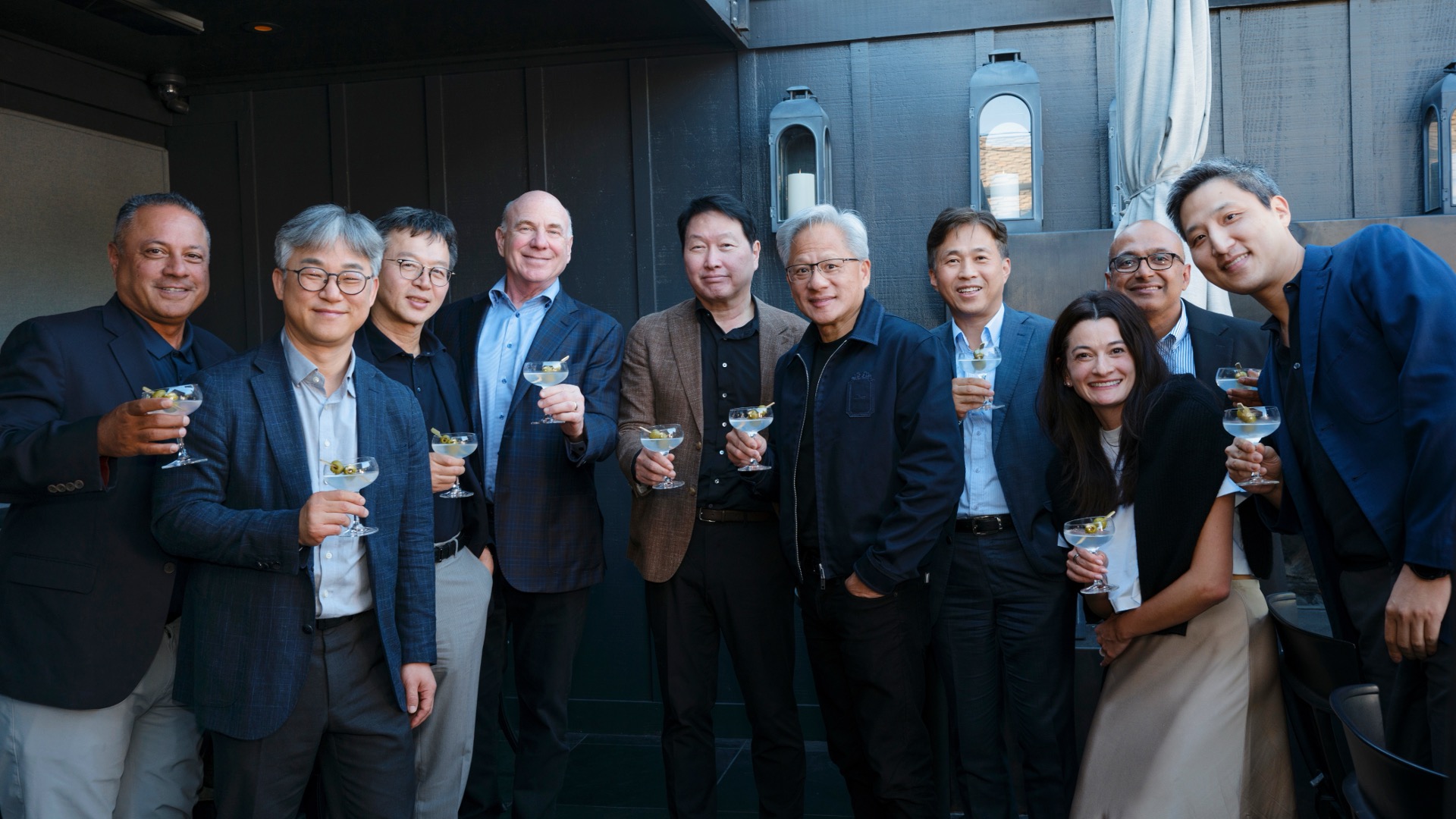
Author: Bitclever AI Research ## Executive Summary At the AI Summit in San Francisco, South Korean President Jae Myung Lee, business leaders and researchers met with NVIDIA and ecosystem partners to chart the future of artificial intelligence in South Korea. The highlight was the announcement of a joint research lab between NVIDIA and KAIST (Korea Advanced Institute of Science and Technology), the first of its kind between a Korean university and a global technology company, consolidating the country's full-stack strategy to establish itself as a global hub for AI innovation. ## What Happened During the AI Summit in San Francisco, the South Korean delegation — led by President Jae Myung Lee and top representatives from the country's business and scientific communities — met with NVIDIA and several technology ecosystem partners to discuss progress on the national artificial intelligence agenda. This meeting builds on NVIDIA founder and CEO Jensen Huang's visit to South Korea the previous month, which had already laid the groundwork for deeper collaboration between the Asian nation and NVIDIA. The central announcement of this edition of the summit was the creation of a joint AI research lab between NVIDIA and KAIST, based at the Kim Jaechul Graduate School of AI in Seoul. This lab will be dedicated to advancing so-called "agentic AI" — artificial intelligence systems capable of acting autonomously and pursuing goals — and represents the first partnership of its kind between a Korean university and a globally recognised technology company. The collaboration will combine NVIDIA's full-stack AI expertise, the open NVIDIA Nemotron models, and the computing power of NVIDIA AI Cloud partners with the scientific talent of one of Asia's leading universities. The goal is to establish a robust academic AI research programme capable of generating knowledge applicable to both the scientific community and Korean industry. In parallel, on the eve of the summit, Jensen Huang had dinner with Chey Tae-won, chairman of SK Group, along with teams from SK hynix and SK Telecom, in Woodside, California. This meeting reinforces an existing partnership between NVIDIA and SK Group, which in June had announced an expanded collaboration for the co-development of memory for NVIDIA platforms — spanning AI infrastructure, personal AI and physical AI. ## Why This Matters South Korea's push into AI is not an isolated move, but part of a coordinated national strategy involving government, universities and major business conglomerates (chaebols) such as SK Group. Establishing a joint lab with a leading academic institution like KAIST signals a long-term approach, focused not only on adopting technology but on building talent and generating original research on Korean soil. This move fits within a broader trend of Asian countries — South Korea, Japan, Singapore — competing for leadership positions in the global AI race, seeking to reduce dependence on imported technology and develop their own research and infrastructure capabilities. The presence of a head of state at an event of this nature, accompanied by major business leaders, reinforces the message that AI has become a matter of industrial policy and national economic security, rather than merely a sector-specific technology issue. For infrastructure providers like NVIDIA, this type of partnership consolidates long-term strategic relationships with key markets, while also creating innovation hubs that could influence the development of new AI models and applications globally. ## Business Impact For organisations operating in South Korea or maintaining business relationships with Korean companies, this type of move carries relevant practical implications: - **Acceleration of the local AI ecosystem**: investment in academic research and computing infrastructure should translate, over the medium term, into greater availability of specialised talent and "made in Korea" AI solutions, including models and applications optimised for regional needs. - **Strengthening of technology supply chains**: the collaboration between NVIDIA and SK hynix around memory for AI platforms reinforces South Korea's position in the global semiconductor value chain, a critical factor for companies that depend on AI hardware at competitive costs and with predictable delivery times. - **New partnership opportunities**: companies operating in sectors such as advanced manufacturing, telecommunications (via SK Telecom) and applied research may benefit from technology spillovers resulting from the joint NVIDIA-KAIST lab, particularly in agentic AI and physical AI. - **A signal for investment and strategic planning**: international companies considering expanding operations in Asia-Pacific should closely monitor these developments, as they indicate where governments and large business groups are concentrating resources and where competitive advantages may emerge in the short to medium term. ## Bitclever Perspective At Bitclever, we closely follow this type of strategic move, because it illustrates a pattern we consider essential for any organisation seeking to leverage artificial intelligence sustainably: the combination of robust technology infrastructure, applied research and specialised talent. Korea's bet on agentic AI — systems capable of operating autonomously and pursuing goals — aligns with trends we have been observing among our clients in Portugal and the wider European market. Increasingly, companies are looking not just for generative AI tools, but for solutions capable of autonomously automating complex business processes, integrated with Low-Code platforms such as OutSystems and Appian, and complemented by RPA initiatives. We believe the Korean example reinforces a lesson valid for any organisation, regardless of scale: success in AI adoption depends not only on choosing the right technology, but on simultaneously investing in team capability-building, strategic partnerships, and a long-term vision of how intelligent automation can transform processes and business models. Bitclever positions itself precisely as that partner, able to help companies navigate this complexity — from assessing automation and AI opportunities to implementing concrete solutions that deliver measurable value, always with a consultative approach tailored to each organisation's reality. ## Conclusion South Korea's coordinated push into artificial intelligence — combining academic research, computing infrastructure and strategic business partnerships — is a clear example of how AI is becoming a central pillar of industrial policy and national competitiveness. For businesses and technology decision-makers, the message is clear: investing in AI requires a holistic vision that integrates talent, technology and long-term partnerships. In the coming weeks and months, it will be important to track the concrete results of this collaboration between NVIDIA and KAIST, as well as its potential impact on the development of new agentic AI applications globally.