aiPublished on July 22, 20265 min read

Wistron Inaugurates US Factory to Produce NVIDIA AI Superchips

Wistron has opened its first US factory, in Fort Worth, Texas, a $700 million investment to produce NVIDIA GB300 and Vera Rubin superchips.

NVIDIAWistronInfraestrutura IASuperchipsManufatura AvançadaGB300Vera RubinData CentersSemicondutoresReindustrialização
Wistron Inaugurates US Factory to Produce NVIDIA AI Superchips
Bitclever AI Research
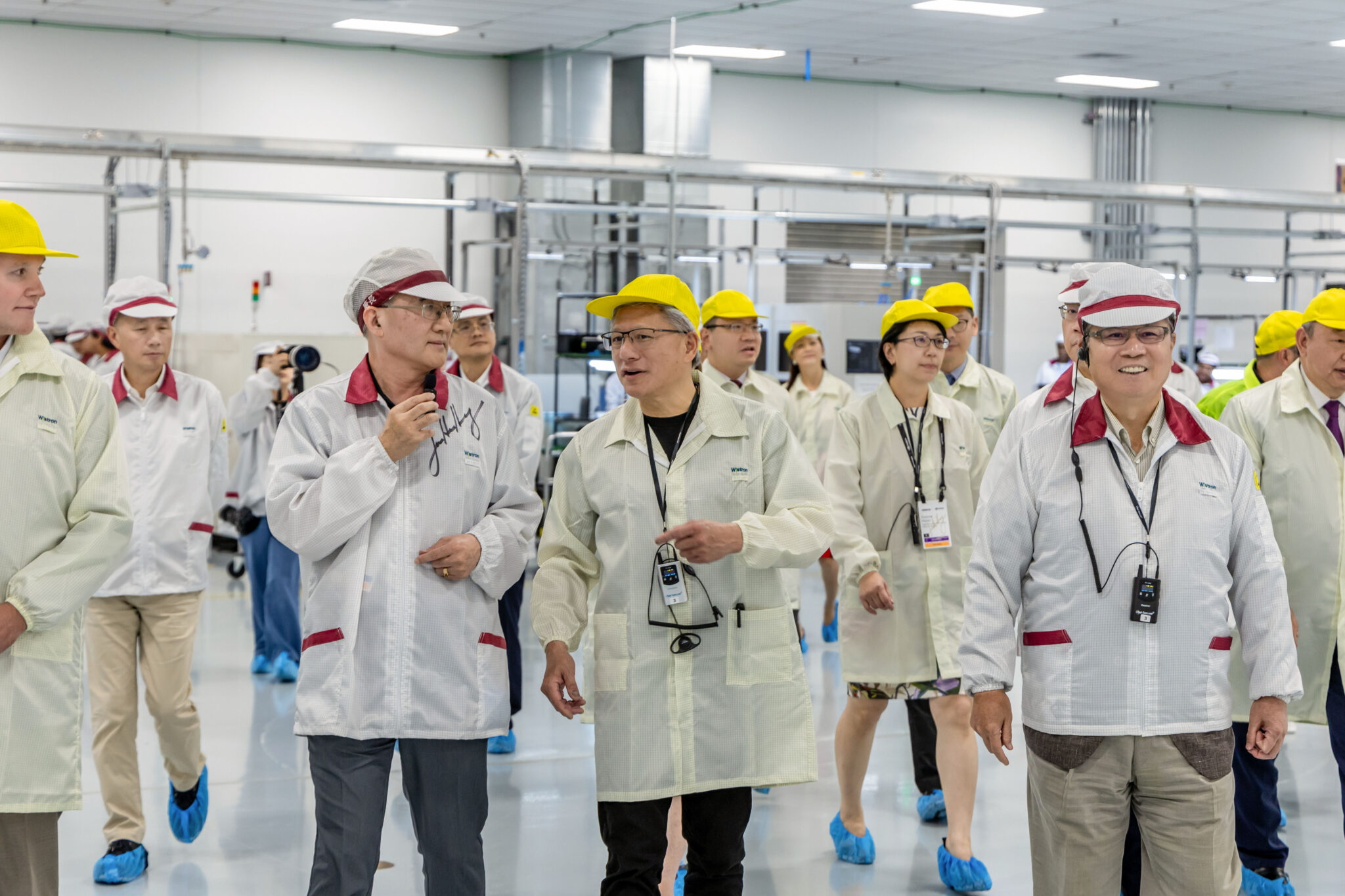
Author: Bitclever AI Research ## Executive Summary Wistron, a longtime NVIDIA partner, has inaugurated its first manufacturing facility in the United States, in Fort Worth, Texas. This is a $700 million investment that has already created more than 500 jobs, with the goal of reaching 1,000 by the end of the year, and is aimed at producing NVIDIA GB300 Grace Blackwell Ultra and Vera Rubin superchips — core components of the infrastructure underpinning the world's most advanced artificial intelligence systems. ## What Happened Wistron has officially opened its first factory in the United States, located in Fort Worth, Texas. The greenfield facility, spanning 324,000 square feet (about 30,000 square meters), was inaugurated before an audience of Wistron executives, representatives of the Taiwanese government, and local Fort Worth leaders. At the opening ceremony, Jensen Huang, founder and CEO of NVIDIA, took the stage alongside Simon Lin, Wistron's president, to discuss the significance of building infrastructure for the AI era on American soil. "Manufacturing is an essential pillar for every economy and every country," Huang stated. "Building chip factories, packaging factories, computer system factories like this one, and AI factories across the United States, has allowed the country to truly reindustrialize for the first time in a long while." The new factory, designated D1, currently operates two manufacturing cells: one dedicated to producing the NVIDIA GB300 Grace Blackwell Ultra Superchip and another that will produce the NVIDIA Vera Rubin Superchip. The facility is scaling up production throughout this year, with the goal of manufacturing tens of thousands of boards per month, representing the industry's most advanced technology. The total investment amounts to $700 million and has already resulted in the creation of more than 500 new jobs at the Texas facility, with plans to expand to 1,000 jobs by the end of the year. According to Huang, this expansion is generating opportunities across multiple professional fields, including piping, construction, manufacturing, and electrical work. ## Why This Matters This announcement comes at a time when demand for AI infrastructure is growing at an unprecedented pace. The superchips produced in Fort Worth — the GB300 Grace Blackwell Ultra and the upcoming Vera Rubin — are fundamental components of the data centers and computing systems that power today's most demanding generative AI models and enterprise applications. Wistron's decision to establish advanced manufacturing capacity in the United States reflects a broader trend toward reshaping global technology supply chains. Rather than relying exclusively on production hubs in Asia, key players in the semiconductor and computing systems ecosystem are geographically diversifying their production capacity, bringing it closer to end markets and strengthening supply chain resilience. For the AI industry as a whole, this expansion of production capacity is particularly relevant because the availability of cutting-edge hardware remains a limiting factor in the large-scale deployment of AI systems. Factories like D1 in Fort Worth represent a concrete step toward eliminating bottlenecks that have constrained the pace of AI adoption at both enterprise and institutional levels. ## Business Impact For organizations that depend on AI infrastructure — from cloud computing providers to companies managing their own data centers — the increase in production capacity for superchips like the GB300 and Vera Rubin carries direct, practical implications: **Greater availability of advanced hardware.** Scaling up production in the United States could help reduce lead times and ease pressure on the global supply of components critical to AI infrastructure, something that has been a recurring challenge for companies seeking to deploy or expand high-performance computing capabilities. **Supply chain risk diversification.** Companies planning significant investments in AI infrastructure should consider that having production capacity across multiple geographic regions can reduce exposure to geopolitical or logistical disruptions — an increasingly important factor in strategic technology planning. **A signal of market maturity.** The scale of the investment — $700 million and hundreds of new jobs — suggests sustained confidence in future demand for AI infrastructure, which may inform investment decisions and capacity planning for companies that rely on these systems. **Opportunities across the supplier ecosystem.** The creation of this factory also opens up opportunities for service companies, systems integrators, and technology consultants that support organizations in adopting and optimizing infrastructure built on these new superchips. ## Bitclever Perspective At Bitclever, we closely follow the evolution of the infrastructure underpinning the artificial intelligence solutions we deploy for our clients. The increase in production capacity for superchips like the NVIDIA GB300 and Vera Rubin is a significant development for any organization planning or expanding its AI strategy, whether through its own infrastructure or through partnerships with cloud providers. This kind of advancement in the hardware supply chain reinforces our belief that enterprise AI adoption must be accompanied by careful planning of the underlying infrastructure — whether on-premise, hybrid, or fully cloud-based. We help companies navigate these decisions, assessing not only current computing needs but also the expected evolution of demand for AI processing, ensuring that technology investments made today remain fit for tomorrow's requirements. For Portuguese and European organizations seeking to understand how these shifts in the global semiconductor supply chain may affect their technology roadmaps — whether in terms of costs, implementation timelines, or the choice of infrastructure partners — Bitclever is ready to help define robust automation and AI strategies aligned with market realities. ## Conclusion The opening of Wistron's Fort Worth factory represents more than a one-off industrial investment: it is a clear indicator that AI infrastructure is becoming a global strategic priority, with direct implications for the availability, cost, and resilience of the systems powering the next generation of enterprise artificial intelligence applications. As this production capacity expands, companies that are able to anticipate and properly plan their adoption of AI infrastructure will be better positioned to capitalize on the opportunities this technology continues to generate.