aiPublished on July 15, 20266 min read

NVIDIA and Japan Strengthen Full-Stack AI and Robotics Ecosystem: The SEGA and RTX Spark Case

NVIDIA celebrates 30 years of partnership with SEGA and strengthens Japan's full-stack AI ecosystem, with significant implications for manufacturing, robotics and enterprise computing.

NVIDIAInteligência ArtificialJapãoRobóticaInfraestrutura de IAComputação HíbridaInovação TecnológicaRTX Spark
NVIDIA and Japan Strengthen Full-Stack AI and Robotics Ecosystem: The SEGA and RTX Spark Case
Bitclever AI Research
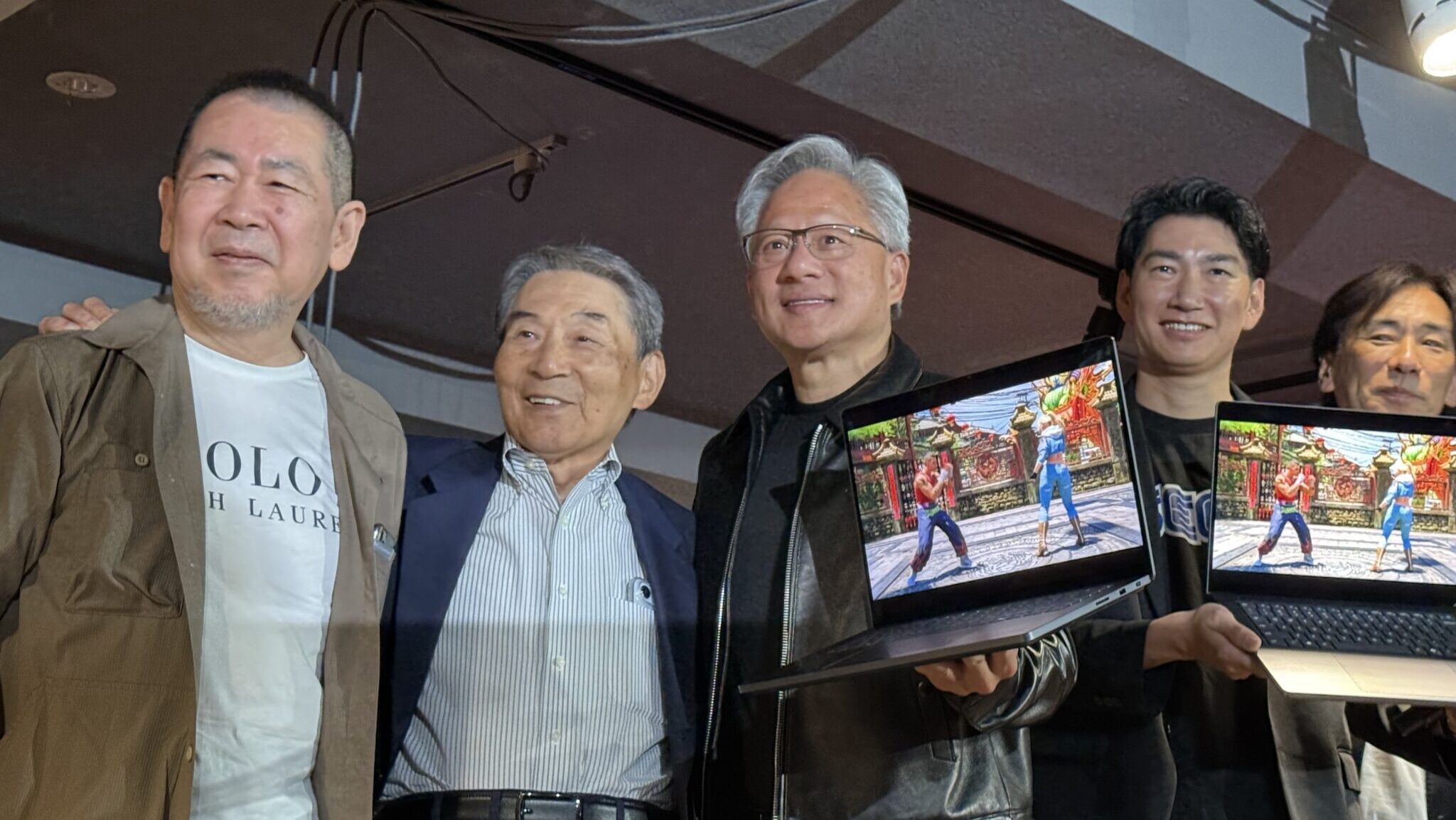
Author: Bitclever AI Research ## Executive Summary NVIDIA is expanding its AI and robotics ecosystem in Japan, one of the world's leading hubs of technological innovation, through partnerships with manufacturers, robotics pioneers and infrastructure builders. Among this week's announcements, the celebration of 30 years of collaboration with SEGA stands out, materialised in the arrival of iconic titles such as *VIRTUA FIGHTER CROSSROADS* on the new NVIDIA RTX Spark platform, illustrating the company's strategy of building "full-stack" technology — from hardware to software — applicable across multiple industries. ## What Happened According to NVIDIA's official blog, the company and its partners in Japan presented this week the latest advances in their AI ecosystem, reinforcing the country's position as one of the global hubs for technology development across the full stack — that is, cohesively integrating infrastructure, hardware, software and AI and robotics applications. One of the announced highlights was the celebration of more than three decades of partnership between NVIDIA and SEGA. This collaboration dates back to 1995, when NVIDIA worked with SEGA on the development of emerging graphics technology for arcade systems and consoles, with the NVIDIA NV1 chip powering the first PC version of *Virtua Fighter*, one of the world's first 3D fighting games. As part of this celebration, SEGA announced support for the new NVIDIA RTX Spark platform — a superchip designed for thin Windows laptops and compact desktops — bringing *VIRTUA FIGHTER CROSSROADS* and other iconic titles from the brand to this new generation of devices. The announcement was made in Akihabara, Tokyo's historic gaming technology hub, at the original site of SEGA's first arcade (now GiGO Akihabara 3), with the presence of Jensen Huang, CEO of NVIDIA, Haruki Satomi, CEO of SEGA, Shuji Utsumi, COO of SEGA, Yu Suzuki, creator of *Virtua Fighter*, and Shoichiro Irimajiri, former president of SEGA. According to NVIDIA, RTX Spark represents a new era of Windows PCs designed not only for gaming and content creation, but also to support personal AI agents — a clear sign of how consumer computing is converging with advanced artificial intelligence capabilities. ## Why This Matters Japan occupies a strategic position in the global AI landscape, combining three factors rarely found together in a single market: a world-class manufacturing industrial base, decades of leadership in robotics, and a consumer technology industry with global reach — of which SEGA is an emblematic example. NVIDIA's "full-stack" approach, integrating chips, computing platforms, software and development tools, allows these different sectors — from smart factories to digital entertainment — to share the same underlying technology infrastructure. The SEGA/RTX Spark case, although seemingly centred on the gaming sector, illustrates a broader trend relevant to business decision-makers: NVIDIA is positioning the personal computer as a hybrid computing platform, capable of simultaneously supporting demanding graphics applications and AI agents. This convergence between creative computing, gaming and agentic AI is also reflected in other areas of the ecosystem presented in Japan, namely industrial robotics and datacentre infrastructure — domains where the same logic of unified platforms applies to critical business operations. For organisations tracking the evolution of enterprise AI, this type of announcement confirms that major technology providers are investing in robust national ecosystems, with deep, long-term partnerships with local players — a model that can inform technology adoption strategies in other markets, including the European one. ## Business Impact Although the specific SEGA announcement is aimed at the consumer market, there are concrete implications for businesses that should be considered: - **Convergence of hardware for AI and productivity**: Platforms such as RTX Spark, originally conceived for gaming and content creation, are also being designed to support local AI agents. This signals a trend of business devices (laptops, workstations) increasingly capable of running AI workloads directly on-device, reducing dependency on cloud infrastructure for certain tasks. - **Long-term partnership model**: The 30-year relationship between NVIDIA and SEGA demonstrates the strategic value of lasting technology partnerships. Companies that invest in technology providers with an ecosystem vision, rather than one-off solutions, tend to benefit from continuity of innovation and long-term support. - **Japan as a benchmark for full-stack ecosystems**: Organisations with manufacturing, robotics or industrial automation operations can look to the Japanese model as an example of how to cohesively integrate AI infrastructure, specialised hardware and vertical applications — an approach replicable in other geographic and sector contexts. - **Evolution of work platforms**: The arrival of agentic AI capabilities in consumer and professional devices anticipates a future normalisation of these features in business environments, requiring organisations to start planning the integration of local AI agents into their workflows. ## Bitclever Perspective At Bitclever, we closely monitor the moves of major AI infrastructure providers, including initiatives such as this NVIDIA ecosystem push in Japan, given their relevance in shaping global technology trends. Cases like the NVIDIA-SEGA partnership, although consumer-market oriented, offer valuable lessons about the direction hybrid computing — combining graphics, creative and agentic AI capabilities — is taking. For Portuguese and European companies looking to modernise their operations through intelligent automation, AI and low-code platforms, it is essential to understand these market dynamics in order to make informed decisions about technology investment. Bitclever helps organisations assess how trends such as the convergence between consumer hardware and enterprise AI capabilities can be translated into concrete opportunities — whether in choosing infrastructure, defining local versus cloud AI architectures, or integrating intelligent agents into business processes. Our consultative approach focuses on identifying, amid the noise of global technology announcements, what is genuinely relevant and applicable to each organisation's context and digital maturity, avoiding hasty technology adoption without a clear strategic roadmap. ## Conclusion The strengthening of NVIDIA's ecosystem in Japan, exemplified by the celebration of 30 years of partnership with SEGA and the launch of the RTX Spark platform, is yet another sign of how the technology industry is converging consumer hardware, creative capabilities and agentic artificial intelligence into a single infrastructure. For business decision-makers, what matters is not the specific announcement of a game or device, but the underlying trend: AI is becoming a native layer of personal and professional computing. Organisations that track and anticipate this evolution will be better positioned to integrate the next generations of AI tools into their business processes.